Sunday, April 26, 2015

UPDATED - Nepal Earthquake: Individual action is not a hopeless cause


Hi all,

I started writing Sunday Roast but felt my energy should be directed towards informing people about ways to help with the Nepalese earthquake.

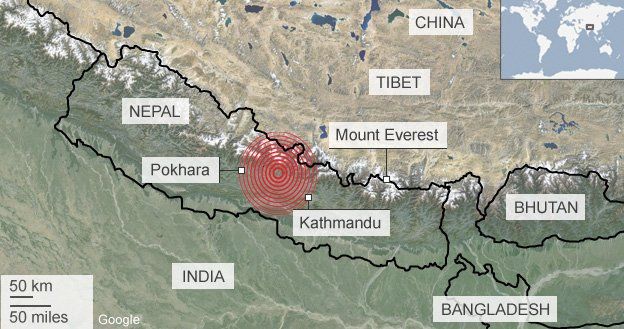
Nepal earthquake epicentre
Map showing earthquake epicentre near to Kathmandu, Nepal
Source: bbc.co.uk

Many of you may have visited Nepal, stayed with host families or ventured out on treks from Everest base camps. I was meant to be in Nepal yesterday, staying with my childhood best friend and her partner near Kathmandu (they are safe, by the way). Of course, my trip to India and Nepal was cut short so I can only imagine what survivors, friends and family, aid workers and officials must be going through.

That is all many of us can do: imagine. The news is a funny thing. We tend to focus our energy on news stories we can relate to, or have experienced/could experience ourselves; events that have happened in similar geographical regions ('close to home'), to communities or individuals with similar cultures and economies to our own. Being able to relate, to understand leads to compassion and action - whether in the form of educating others about the event, or devoting your own resources (money, time, other assets) to the cause.

Also, when an event becomes so large in magnitude - in death toll, environmental and economic impact etc. - we are at risk of feeling hopeless, resistant to helping those who are suffering, apathetic. This 'compassion fatigue' is common in the media, especially when stories are combined with frequent, overwhelming images of tragedy, desperation and crisis.

I want us to go past this.

We cannot, and should not hope to, empathise with what is being experienced in Nepal. But we can still act and provide further capacity and rehabilitation. People have coping mechanisms (e.g. my friend is camping in a tennis court to avoid aftershocks) and rescue efforts are already underway from both formal aid agencies and local groups. These provide a foundation from which we, on the other side of the world, can build upon.

Individual action is not a hopeless cause.

To get you started:

How to help victims of the Nepal earthquake - A list of websites of NGOs and aid organisations that are working in Nepal. Many have set up online donation platforms for aid ranging from tents and food to care for bereaved families.

How to support the volunteer response in Nepal - social media, mapping, translators...

Charity Navigator - Giving you information on different charities, what they are providing and their overall 'rating' in a particular country. This link gives you a list of charities with high ratings in Nepal.

Humanity Road - Provides information on most affected resources, locations and even info on blood donations as part of aid.


Specific donation platforms include: 

Social media:


Using data systems 
  • Real time crisis mapping from Standby Task Force 
  • HBX Beta Data - Data on earthquake impact (mortality, no. of those affected) but also on water, infrastructure, health services, airports. 

Information on earthquake and aftershocks: 

If you know of other ways to help, or have information from those in Nepal, please comment below. Many shipments from international aid donations won't arrive until mid-week, so local charities and relief efforts are also crucial - I can't find much online about these, so please comment if you know of any. 

Becca x

Sunday, April 19, 2015

Sunday Roast 19th April 2015 #weeklyfoodnews


I had my first ice lolly of the year the other day. Anyone who says that a Twister is not the best ice lolly automatically goes down in my books. They are everything an ice lolly should be - citrusy, creamy and fruity. I judge anyone who buys those bright blue bubblegum lollies; they suggest the eater wants to bring pain, sadness and chemical intoxication upon themselves.

Before I start craving ice lollies at 8am in the morning, let's get onto the Sunday Roast. 

Recipe

Field mushrooms stuffed with quinoa, leek and spring garlic (Vegan)

Saturday marked the first cooking session with my friend Shoji, a vegan ultra-runner with a keen interest in cooking. I should have known that Shoji would want to cook with spring garlic. He has this thing for garlic. The first thing he offered me was 'black gold' - a caramelised black clove of garlic which has been slowly heated to give a licorice flavour and chewy texture.

That was simply the garlic appetiser.

Throughout the meal, I watched in admiration and slight concern as Shoji consumed five whole bulbs of roasted garlic. He didn't even peel them by hand, just sucked the sweet, roasted pulp out of the white husk.

Black gold garlic
'Black gold' garlic

Alongside spring garlic, the stuffed mushrooms recipe includes:

Ingredients
  • 4 large field mushrooms (with stems removed)
  • coconut oil for frying
  • 4 spring garlic (finely chopped)
  • 1 large leek (finely chopped)
  • 1 tbsp Jalfrezi curry powder 
  • 1 tsp chilli flakes
  • 130g cooked quinoa 
  • salt and pepper to taste 
  • feta (optional) 
Preparation
  1. Pre-heat oven to 200 degrees C. 
  2. Remove the stalks from the mushrooms  - use them in a salad or chop them up and add to spring garlic & leek mix. 
  3. Heat a frying pan over medium heat and add coconut oil to the pan. You can use any other form of oil, but the coconut gives a slightly sweet taste dimension. 
  4. Add the finely chopped spring garlic, leek, curry powder and chilli flakes. 
  5. Sautee until reduced and slightly caramelised - it should take approximately 5 minutes. 
  6. Add the cooked quinoa to the pan and season well with salt and pepper
  7. Scoop out the quinoa mix and place onto the flat mushroom surface. Compact into a dome. 
  8. Put mushrooms in the oven and bake for 10-15 minutes. 
  9. Sprinkle feta on top if you want a vegetarian version, but it tastes delicious without. 
  10. Enjoy :) 
We ate the stuffed mushrooms alongside roasted vegetables - parsnips, courgette, pepper, garlic and fennel - and a raw salad of avocado, peppers, sprouting lentil shoots and spinach, all combined together with nutritional yeast.

Baked mushrooms quinoa leek garlic
The baked mushrooms in all their not-so-photogenic glory

Vegan salad roasted vegetables
The final meal - vegan heaven
Oh, and let's not forget the termites.

Brought back from Japan by Charlotte, our fellow entomophagy friend, they were crunchy and slightly yeasty. Compared to the hornet larvae I tried a few months ago, they were not as flavoursome, so I'd suggest taking a handful rather than just one or two.

Edible termites Japan
Look at those little guys...

Blog

Saveur Best Food Blog Awards 2015 

Alongside shortcuts to my calendars, mailboxes and cloud storage, there is a new bookmark tab on my Google Chrome bar: the Saveur Blog Awards 2015.

If you don't know already, Saveur is basically the king of food websites - its tagline is "Savour a world of authentic cuisine" and it does so by providing food and drinks recipes, culinary travel tips, kitchen skills and techniques. Simply flicking through the sheer number of articles on offer is enough to get your taste buds tingling and fill you with infinite, delicious ideas.

Saveur Food Blog Awards 2015

Each year Saveur hosts the Best Food Blog Awards, including a 'Blog of the Year' award and numerous other food, drink, baking, photography, travel, writing and 'deliciousness' awards. Last years 'Blog of the Year' was I Am A Food Blog - this fantastic blog sets a very high standard (both in terms of recipes and humour) for 2015's finalists to follow. 

The final date for voting is April 30th. Please check the blogs out and vote for your favourites. As a food blogger myself, I can promise you that just one extra vote would be appreciated - passion, time and energy goes into each article or photo, and Saveur provides a platform to recognise these efforts. 


News 

Here are the secrets to a long and healthy life, by The National Geographic 

Famous comedian, Louis CK, once reflected that the lifestyle recommendations given to pregnant women of having sex and eating curry must have been decided by a group of men. All comedy aside, it seems like this comment has a sturdy empirical foundation...

After compiling 5 years of research from around world, mainly based on anecdotes and case studies collected by Dan Buettner, one National Geographic study confirmed what makes some people live longer than others:

"Diet is key to longevity, but also sex, naps, wine and good friends"

The article focuses particularly on Ikaria, Greece, where the population eats a Mediterranean diet of beans, potatoes, green weeds and salads. They also drink a moderate amount of good wine, nap a lot - approximately 30 minutes a day - and 50+ year olds have sex more than twice a week. All this lowers risk of heart disease, halves rate of mortality compared to their celibate friends, have lower levels of cortisol - a stress hormone - and higher levels of antioxidants.

Well, that's settled isn't it.

No, not just yet. There is one catch: maintaining a good amount of physical activity. Gardening, harvesting, putting physical effort into making your own food, walking to the market... They are all simple everyday actions that can dramatically alter longevity. Sitting down behind a desk all day and relying on short bursts of exercise, before plunging into a healthy Mediterranean meal and glass of cheap wine, won't suffice. It is about continual activity, fresh air, a good clean diet and a slower pace of life.

After all, the tortoise always wins...

Inspiration

Knowledge, Nudge and Nanny, by Professor Susan Jebb at the Future of Food. 

The National Geographic article above emphasises the importance of incorporating healthy lifestyles and diets into your everyday choices and actions. Here, I provide you with an interesting video that looks at the ways in which 'nudges' can be used to improve diets.


"Around 33,000 premature deaths could be avoided each year in the UK if we achieved the dietary recommendations for good health. But the simple concept of eating well belies the complexity of the change required".  

Professor Susan Jebb is a nutrition scientist who questions how what we eat affects obesity and how to reduce risk of obesity-related disease. In other words, it is not about how to respond to obesity epidemics, but how to prevent them from happening in the first place.

One way of doing so is using 'nudges', a term coined by Thaler and Sunstein in 2009. Nudges are essentially things that can influence people's thinking and decision-making. 

There are plenty of nudges in the food world. Some are blatant, such as advertising slogans which 'nudge' us towards certain foods (especially junk foods). Some are more subtle, such as the layout of supermarket aisles - the geography of where certain products are located, and how much effort it takes for us to reach them, cause us to follow a particular route and purchasing pattern.

Google has started using nudges to promote healthy eating amongst employees. They provide both cookies and fruits in their free canteen, so as to not limit choice (people don't like lack of choice). However, the fruits are visibly on display and the cookies are within a box. The box acts as a 'nudge', resulting in consumers going for the most optimal food choice (i.e. the one requiring least time and effort to access) - the fruit!

The question that Professor Jebb poses is whether nudges are enough to transform knowledge about healthy eating into positive action (closing a 'value-action' gap), or whether we still need 'nanny state' government policy to push us in the right direction. What do you think?

Friday, April 10, 2015

Borough Market: I went to buy bread, I came out a store holder.


You know those times when you walk into a supermarket intending to buy bread and you come out with a variety of miscellaneous products that just 'screamed your name' as you walked down the aisle? It felt right at the time, you needed that reduced-section cheesecake.

It happens to the best of us, but how many of you have walked into a market to buy bread and come out having spent the day as a store holder? 

This exceptional experience happened to me in Borough Market, London, a few weeks ago (I can already see my friends rolling their eyes back and saying "It would only happen to you"). Prepare yourself for a wonderful story involving bread, raw milk and cheese, bountiful amounts of sausage, a bit of illegal smoked swan and a whole lot of fun. 

So, why was I in London in the first place? 


As many of you are aware, I don't live in London. In fact, I really am quite scared of London: No one smiles, I don't understand the Tube system, and seeing me walk down Oxford Street is like watching poor, ill-fated Mufasa get trampled by wildebeest. 

But, alas, over half of the UK's emerging, innovative food businesses, events and street food festivals are based in London. I was covering just one of these unique food events, called Milk.Tea.Bread, hosted by TOAST. Without too much shameless self-promotion, if you want to read my article about the TOAST event, click here

Unsurprisingly, the event series revolved around our staple foods of milk, tea and bread, uncovering the science, politics and history behind them through panel discussions and tasting sessions. The location for this series was Borough Market, a 1000-year-old gastronomic playground filled with a multitude of organic and artisan foods ranging from truffle oils and wheatgrass shots to freshly made pasta and breads. 

The great thing about the TOAST event was that the panellists included experts within fields of journalism, policy and science, but also stallholders and entrepreneurs who own stalls in Borough Market itself. I was captured by the passion, knowledge and high quality products offered by the stallholders, and decided to arrive in London a few hours early and immerse myself in the food smells, samples and stories the Market had to offer. 

Little did I expect to become part of the story myself. 

It all started with the sausage. 

My exceptional Borough Market journey started at a sausage stall, as all good stories should. I must admit, I am not a big sausage fan. It must have been a bad experience with a limp frankfurter, or just the sheer amount of sausage (and beer) consumed in Munich last Christmas.

Just a fraction of the sausages on sale in Munich

However, my absolute love for free samples outweighs any partiality towards food. In Borough Market, samples are rife. As long as they are not exploited by hungry hands, they do serve a purpose: Through sampling the food, you can truly experience the aroma, texture, initial flavour and after-taste, all helping you better value the product and producer. 

During my day at Borough Market, I had free samples of: mushroom pate, slow cooked goat, smoked salmon, partridge with apricots and cashews, fresh tortellini and gnocci, raw yoghurt and cream, oysters with lemon and Tabasco, huge medjool dates, white truffle oil, chocolate brownie, and smoked swan (yes, swan. It was legal, and tasted like very rich steak tar tar with a hint of mackerel...a unique taste sensation).

Let's not forget the sausage. 

Upon entering Borough Market, I stumbled upon Cannon & Cannon's charcuterie stall. They provide a bounty of delicious British sausages - in fact, I would bet there is one for every single mood or meal. Hey, they even have a sausage selection for romance, with their online shop confiming that "Nothing says I love you like a pack of cured meat". 

Right on, Cannon & Cannon, right on. 

I got chatting to Antony, a young, bearded stallholder who enticed me with a sample of venison chorizo. It was not spicy enough for me, so I was given a Moon Green's fiery salami blended with pork fat, chilli and a little fennel. This process went on for a while, allowing for conversation to flow in between samples. 

It emerged that, alongside acting as a part-time charcuterie vendor, Antony is a musician (I should have known from the beard). Having a diversity of professions and passions is a common trend in Borough; nearly all stallholders I met and conversed with that day had other side-jobs and ventures. This included network marketing, journalism, dairy consultancy, technological start-ups... It is a fascinating community; everyone has their own story to tell, and their dynamism and determination complements the rich food landscape Borough Market has to offer. 

After telling Antony my own story, and justifying why I had been wandering around Borough Market alone for several hours, he invited me to meet several of his fellow stall-holders. 

Queue Louise from the Cheese. 

Louise from the Cheese


This lady deserves a section all to herself. She is exceptional and one of the most welcoming, warm people I've ever had the pleasure of meeting. Alongside network marketing and fashion photography, Louise has been working part-time at Borough Market for 15 years. 

Her role at the Gorwydd Caerphilly cheese stall is a recent one, starting only three weeks prior to my arrival. Standing there, wrapped up in at least seven layers and chugging down some raw yoghurt to keep warm, Louise invited me to help out on the Caerphilly cheese stall. 

This traditional cheese is produced by the Trethowan family at Gorwydd Farm, west Wales. It is made from unpasteurised cows' milk and rennet, using hand-turned processes and traditional moulds. In other words, it is anything but industrial. After two months of fermentation, the resultant cheese is soft like cheddar with a hard rind, and tastes lemony, intense but creamy. 

Source: slowfood.org.uk
It is also part of Slow Food: an organisation promoting 'good, clean, fair' food around the world by maintaining traditional gastronomic practices, environments and knowledge and educating consumers about the importance of diverse, nutritious and 'slow' (rather than fast food) diets. 


The Slow Food logo hung proudly on the arches of many stalls in Borough Market, reflected by the sun shining through the traditional warehouse slabs. However, many of the visitors to Borough Market - particularly international tourists - did not know about Slow Food. So, when the opportunity of being in a film about Caerphilly cheese arose (don't even ask), I took it on myself to explain why we should all appreciate that little snail and what it stands for. 

The customers appreciated it, truly. 

Showing off my cheese apron after my film debut

Moving onto crusty bread...

My head has been replaced by bread. 

Finally, I got to the stall I was intending to visit in the first place. 

Throughout my stint at the cheese stall, I became accustomed to the flabbergasted looks from Antony at Cannon & Cannon. Things got even better once Louise decided that we should all have some some oysters and champagne as an afternoon 'snack'. So, the three of us engaged in a strange celebration of new-found friendship, sausage and cheese.

Word travelled fast: The bread stall next to Cannon & Cannon was intrigued by my presence and enthusiasm, and wanted me to come and help them out. So, off I went to Olivier's Bakery.

Olivier's Bakery, owned by pastry chef and baker Olivier, entices customers with an array of breads, pastries, brownies and tarts. Rather than try and fail at describing these myself, I thought I should provide this delightful except on their almond croissants: 

"Is it a snowy mountain? Is it a mine of fairy dust? No - that teetering mount of whiteness is in fact Olivier's Bakery's almond croissants, freshly baked each morning. Look closer, and you'll see the feathery, flaky pastry and silvery slivers of sliced almonds peeking out from within its frosty depths. Look closer still, and you'll see the tentative, bulging squidges of ground almond paste, crusting the edges of each croissant..."
You know you want to read on...  

Sorry, more Bread Ahead

Another fantastic bread stall is Bread Ahead, supplying perhaps the most scrumptious, sugar-laced doughnuts known to man. Antony challenged me to try just a bite of their salted caramel doughnut, topped with crisp honeycomb, without finishing the whole thing. I succeeded, but regretfully. 

I had the pleasure of meeting Aidan Chapman, one of the master bakers of Bread Ahead, at the TOAST event. He spoke emphatically of how the industrial, Chorleywood bread process has 'ripped the soul out of modern baking', using low protein flour, artificial additives and preservatives to create a seemingly fresh, fluffy loaf in less than three hours. 

The love, knowledge and care that goes into creating a 'real' loaf of bread - baked using only the essentials of yeast, flour, water and salt - is being lost, and Bread Ahead aims to revitalise this passion for artisan, traditional baked goods. 

One way of doing this is through their Bakery School, nestled in the back of Borough Market. Courses range from half-day introductory sessions to three-day masterclasses, with baked goods including French loaves, hot cross buns, sour dough, gluten-free breads, Italian loaves...the list goes on. I am lucky enough to have got myself a space on the full-day 'Wild About Yeast' sour dough course in July, so watch this space... 

Aidan presenting at the gluten-free bread workshop

Shot of raw cream, anyone? 

After an hour or so, star-jumps and little boxer shuffles were not succeeding in keeping me warm at the Caerphilly cheese stall, so Louise offered me some of her raw yoghurt from Hook & Son.

Frankly, I am hooked. And, it seems like a growing number of UK consumers are too, with Hook & Son currently providing 45% of the UK's raw, unpasteurised dairy.

Source: http://www.hookandson.co.uk/
I have to admit, before trying unpasteurised dairy, I was sceptical. Why? First, I'm mildly lactose intolerant so too much dairy has...unwanted..side effects. Second, my only prior experience of raw milk was while WWOOFing. I had got up at 5am to milk a cow, only be constantly whipped in the face by its tail and have the bucket of milk kicked over. My labour efforts were rewarded with a brief sip of slightly steamy milk - to say the taste was grassy is an understatement, there were actual bits of grass to chew on.

The Hook & Son's milk sample was nothing like this, despite having been milked from a cow the previous day. It was fresh, creamy, cold and clean. I will never forget the comment made by Lee-Anna, a dairy consultant, when describing raw milk at the TOAST event:

"It's like heaven in a glass. The best you've ever had". 
One reason many consumers rely on bottled, supermarket milk is risk of illness from drinking raw, 'live' milk. Historical accounts of TB and brucellosis through drinking unpasteurised milk started a narrative of 'raw' being synonymous with 'unsafe' and 'impure'. Recent research has continued to cement this, suggesting that you are 100x more likely to get ill from drinking raw versus bottle, pasteurised milk.

The issue with this narrative is that it suggests that pasteurised milk is 'safe' and 'pure', even though the industrial dairy system is famed for poor animal welfare and the inclusion of artificial processes and chemicals to make our milk taste fresher and last longer. 

I was eager to strip away this dichotomy between 'pure' and 'impure' dairy, and who better to tell me about the benefits of raw milk than Steve Hook, the 'Moo Man' himself. 

Yes, he is actually called the Moo Man.

Living on the wild side, I decided to try not just a sample of raw milk but also a shot of cream. Every fibre of my being my stomach was screaming 'No, no, anything but dairy!', but I was assured by Steve that most sufferers are only sensitive to pasteurised milk. The lactase enzyme count is much higher in raw milk, allowing for a faster breakdown of lactose sugars and less digestion effort for our own stomachs. The only potential downside to this is that the milk sours more quickly, but Steve commented that many of his customers buy his raw milk specifically for that sour flavour - something 'fresher for longer' supermarket milk cannot provide. 

After a long day, I left Borough Market not only filled to the brim with food and drink, but with an immense amount of hope and inspiration. We always talk of how our food system is broken by industry and homogenisation of Western, fast food diets, but these local stories, people and the foods they love and represent are an indication of a growing awareness of what makes good, nutritious and real food. 

I encourage you all to go and visit Borough yourself, gorge on delicious samples and spark up a conversation with the stall holders - you won't regret it. 
Saturday, April 4, 2015

Food Labelling: We need to know the full story between 'farm' and 'fork'.


As consumers, we place a lot of trust in our food system to deliver both quality and honest food: If we are buying a beef burger, we don't want to find horse in it; if we are buying chips, we don't want to find a piece of metal in our meal.

Despite these acute examples, and a resultant demand for provenance and proper labelling, I can't help but think that there is still a tendency to align with the moto: 'If it looks like chicken, tastes like chicken, then it is chicken'. 

In other words, we are more than happy to scream from the rooftops when our food is definitely not what we ordered, but when it comes to the chronic lack of transparency in our food system - particularly in the stages between 'farm' and 'fork' - we don't really care. 

Farm to fork  - we are at the root of it.
Source: Pinterest Farm to Table series

Innocent smoothies? 


Take Joanna Blythman's investigative article into the health foods industry as an example.  She aims to lift the lettuce leaves from our eyes, uncovering what technical and artificial processes go into giving an illusion of 'natural' and 'fresh' when it comes to our fruit salads to chicken. A label simply indicating the geographical origin, a stamp of approval from the Food Standards Agency, or nutritional information of our salad allows for these processes to remain hidden. As Joanna Blythman states: 

From water-injected poultry and powdered coagulated egg, to ultra-adhesive batters and pre-mixed marinades, the raw materials in industrial food manufacturing are rarely straightforward. In fact, they commonly share quite complicated back stories of processing and intervention that their labels don’t reveal.

Our daily brew 


Let us put our teabag into hot water. I recently attended a TOAST event on the science, politics and history behind our tea; a staple that we regularly consume without a second thought. For example, the average teabag contains leaves from over 36 origins, all bundled up in the same papery mesh.

Sarah Roberts, director of the Ethical Tea Partnership, spoke of how the Fairtrade label - indicating minimum wage for plantation workers - does not reflect other challenges: soil degradation and changing climates, gender inequality, poor living conditions and worker's rights, unethical trade agreements. These are also bundled up in our everyday brew, however the only question we tend to ask is 'how do you take yours?'. 

How much are we lovin' it?


Another example is McDonald's. The world's largest fast food chain has been under a lot of pressure in recent years to improve its animal welfare, organic credentials and nutritional content. To be very honest, it's done fantastically well - in fact, it is now on a par with retail stores such as Marks & Spencers. The use of free-range, organic and free from antibiotics meat and dairy products has led to McDonald's winning a variety of awardsincluding the RSPCA Good Business Awards, and is founder of the European Animal Welfare Platform. Following Starbucks footsteps, McDonald's may also be including a kale 'supersmoothie' into its drinks lists, encouraging healthy eating amongst fast food buyers. 

However, here is the question that always plagues my mind: How can McDonald's offer organic, free-range and ethical products at such a low cost? Surely the two are contradictory; one nourishes the planet and our bodies, and the other maintains an era of cheap, processed food.

One reason for this is pure economies of scale, but another is a relative lack of attention on worker's rights - one of the most important connections between 'farm' and 'fork'. In recent months, evidence has emerged that 33% workers have to treat burns and other injuries with condiments such as mustard, butter and ketchup due to lack of proper health and safety measures. Labour unions have also shown how McDonald's abuses minimum wage requirements, paying staff as low as $8 an hour. A non-violent 'Fight for $15' protest resulted in a $1 an hour raise; an increase that many still believe is not enough.

How can we progress our food labelling system? 


If we truly demand honest information on what we eat, then we need to start practicing what we preach. No more simply relying calorie information, slogans of 'fresher for longer', or country of origin; we need to know the full story. 

I want to give several examples so, along with knowing the story, you can become part of it too.

The Honest Crust, Real Bread Campaign

The Real Bread Campaign is an inspirational movement subsumed within Sustain, the international campaign for better food and farming. 

In a quest to get people to support 'real' bread and local bakeries rather than our mass-produced industrial supermarket loaves, they propose the Honest Crust Act. Chris Young of Real Bread summarised the Act very simply: we need to bake without the use of artificial additives or processing aids, and go by the moto that 'If your grandmother doesn't recognise the ingredient, you shouldn't eat it'. 

The Real Bread Campaign provides a much more detailed list of reasons why we should support the Honest Crust Act, and further information on what is hidden in our industrial loaves. It really is the best thing since sliced bread... 

Petition for an 'Impact Facts' label, Avaaz

Avaaz, a campaign organisation based in the US, is petitioning for an 'Impact Facts' label. They give the example of fish and how it can be labelled as 'locally sourced' even if it has been shipped off to another country to be processed, then shipped back again. They state that better labelling is not just an environmental issue, but one to help reduce global inequality within trade of our staple foods. Our labels need to answer the questions:

  • Where do ingredients come from and where were they processed?
  • How much energy and water was consumed?
  • How many times did they travel by air, sea or land?
You can sign the petition here

True Cost Accounting, Sustainable Food Trust (SFT)

There is a clear discrepancy between retail price and the actual cost of our foods. More often than not, the cheapest foods are those that have the most pernicious impact on our communities, bodies and environments. 

Just imagine walking into a supermarket and finding the cheapest option available. I found a 67p beef lasagne ready-meal; half the price of an organic bag of carrots at £1.50, but more expensive in terms of the long term cost it has on our bodies, community and services, environments and climate.

This needs to be addressed, and the SFT advocates 'true cost accounting' as a means to do so. They summarise this as:

Placing a clear monetary value on the benefits and impacts of different food production systems, would enable the introduction of policy mechanisms to penalise damaging practices and reward the development of systems that deliver positive environmental and public-health outcomes.
Find out more about true cost accounting here.

Tea 2030, Ethical Tea Partnership (ETP)

As I mentioned before, the labels used to comfort our conscience when it comes to tea only tell part of the story. To link all elements from tea production to consumption together, we need collaboration - not only in rhetoric on social, environmental and economic challenges but also between sectors when acting at different levels. 

Tea 2030 aims to do just this, defining itself as a 'multi-stakeholder project exploring the challenges facing the tea sector's future - and how to overcome them'. Using a 'landscape approach' (i.e. the new buzz word for holistic approach), they invite anyone within the tea value chain to work towards this vision. Existing partners include the ETP, Fairtrade International, Rainforest Alliance, Unilever, Tata Global Beverages, Starbucks... 

The progress so far is not well documented, but the diverse coalition of organisations all working towards the same cause is enough of an achievement in itself. You can follow the Tea 2030 here.

******

Finally, if you have any more examples, please comment below or get in touch with me via my Contact page. There are so many labels, and too little time... so, help me out :)